Culture
Wollongong's Art Leaders Transform Steel City Culture
Volunteers and visionaries reveal how persistence built world-class galleries, reshaping the Illawarra's cultural identity beyond its industrial past.
2 min read
Culture
Volunteers and visionaries reveal how persistence built world-class galleries, reshaping the Illawarra's cultural identity beyond its industrial past.
2 min read
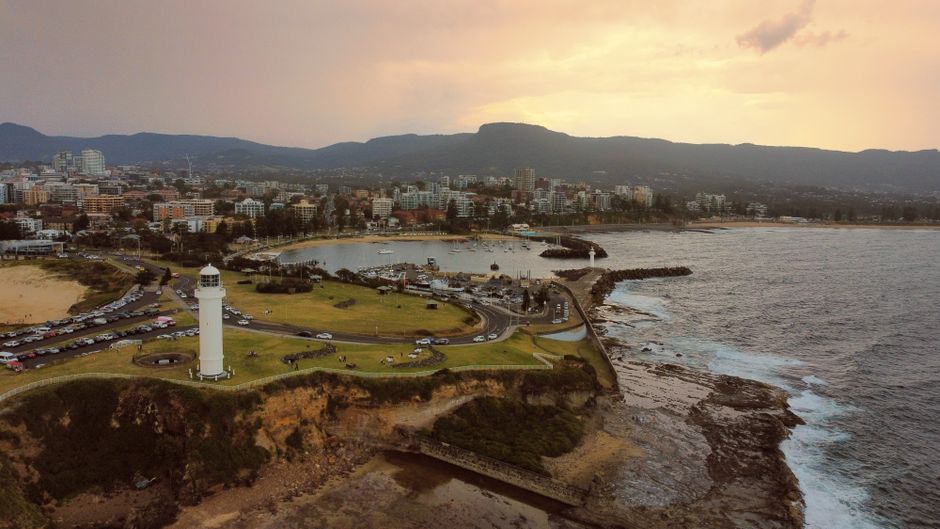
Walk through the Crown Street precinct on any given Friday evening and you'll witness the fruits of three decades of determined cultural labour. The Wollongong Art Gallery, the WIN Entertainment Centre, the newly revitalised harbour-front spaces—these didn't materialise by accident. They emerged from the vision of community advocates who bet on creativity when the city's industrial future looked uncertain.
The story begins in the 1990s, when a cohort of local artists and cultural workers recognised that a post-steel Wollongong needed reinvention. Early grassroots galleries like The Glasshouse Project on Keira Street operated on volunteer goodwill and shoestring budgets. "People were working full-time jobs and running exhibition spaces in their spare time," recalls the institutional memory embedded in Wollongong's cultural organisations. These pioneers established a principle that still guides the scene: accessibility over exclusivity.
The Wollongong Art Gallery's 1983 founding predates the broader renaissance, but its expansion in the 2010s reflected momentum built by independent curators and artist collectives. Today, the Gallery attracts over 120,000 visitors annually, with its contemporary collection representing work by Australian and international artists. Meanwhile, smaller venues—Warrawong's Picton Galleries, the artist studios scattered through the inner suburbs—demonstrate how the institutional success validated the earlier grassroots investment.
What's striking is the deliberate cultivation of local talent. The Illawarra's visual arts community has grown from a scattered few to an estimated 300+ practising artists, many concentrated around neighbourhoods like Wollongong's West End and Figtree. Emerging galleries increasingly feature work by Illawarra-based creators, breaking the historical pattern where local success required relocation to Sydney.
The economic data tells its own story. Wollongong's creative industries sector now contributes approximately $200 million annually to the regional economy, employing nearly 2,000 people directly. Museum and gallery admission revenue, modest by global standards, has nonetheless doubled since 2015.
Today's scene bears the fingerprints of those early believers—people whose names rarely appear in press releases but whose collective determination transformed Crown Street from a dispersed cultural outpost into a destination. Their legacy isn't measured in blockbuster exhibitions alone, but in the institutional infrastructure and cultural confidence they bequeathed. Wollongong's gallery renaissance, in other words, is a story about trusting that creativity matters, and building institutions to prove it.
This article was compiled by AI and screened before publishing. See our editorial standards.
Spread the word
About this article
Published by The Daily Wollongong
Daily brief
Free, in your inbox before 7am. Weekdays.
Stay in the loop