Property
Wollongong Rental Prices Rise: Renters Squeezed
Wollongong rent affordability worsens as Illawarra rental stress narrows gap with Sydney. How Fairy Meadow and Thirroul renters compare to capital cities.
2 min read
Property
Wollongong rent affordability worsens as Illawarra rental stress narrows gap with Sydney. How Fairy Meadow and Thirroul renters compare to capital cities.
2 min read
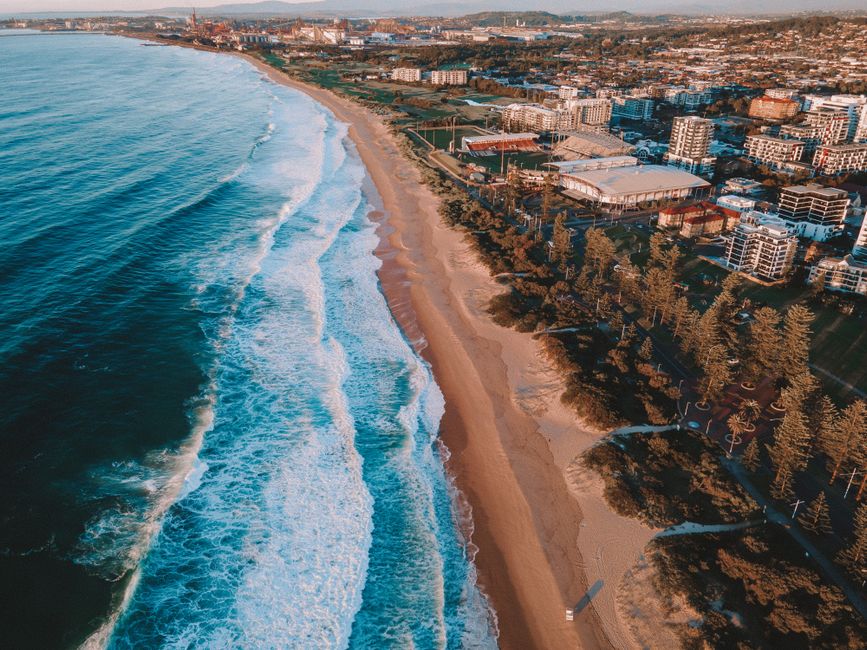
The rental affordability crisis gripping Australia's major cities has long been framed as a Sydney and Melbourne problem. But Wollongong's property market tells a starkly different story, with regional renters increasingly squeezed as the gap between regional and capital city rental stress narrows dramatically.
While Sydney's median house price hovers around $1.2 million—roughly 40 per cent higher than Wollongong's $860,000—rental yields paint a more complicated picture. Data across key Illawarra suburbs reveals that renters in established neighbourhoods like Fairy Meadow and Thirroul are now spending comparable proportions of their income on housing as their Sydney counterparts, despite lower purchase prices.
A two-bedroom apartment in Fairy Meadow currently rents for $380–$420 per week, while similar properties in outer-west Sydney command $350–$400. Yet Wollongong's median household income sits around $75,000—roughly 12 per cent lower than Sydney's outer suburbs. The mathematics favour neither renters nor aspiring buyers.
"Wollongong's historically been seen as an affordable escape valve," explains Dr Michael Chen, an urban economist at the University of Wollongong. "But as Sydney overflow accelerates and investors recognise coastal-adjacent value, we're watching regional rental markets converge with capital city stress levels."
The implications ripple through neighbourhoods from Keiraville to Dapto. Young families who might once have used regional rent savings to accumulate a deposit now find themselves locked into extended tenancy. The University of Wollongong's annual rental surveys confirm median rental stress—spending more than 30 per cent of income on housing—now affects 38 per cent of local renters, compared to 35 per cent nationally.
Property managers report increased competition for available stock, particularly around Wollongong CBD's revitalisation precinct, where new apartments on Crown Street command premium rents that reflect Illawarra's changing status. Simultaneously, first-home buyers face the uncomfortable reality: saving for a deposit while paying competitive regional rents offers minimal advantage over Sydney's outer suburbs.
The Illawarra's traditional strength—affordable housing attracting Sydney-weary relocators—has paradoxically created its own affordability pressures. As demand rises, landlord investment intensifies, and rental competition sharpens. Meanwhile, the window for regional rent savings narrows.
For Wollongong's renters, the calculus has shifted. Regional affordability, once a reliable refuge, increasingly feels like a diminishing advantage rather than a genuine solution.
This article was compiled by AI and screened before publishing. See our editorial standards.
Spread the word
About this article
Published by The Daily Wollongong
Daily brief
Free, in your inbox before 7am. Weekdays.
Stay in the loop