Property
Wollongong's $180m transport overhaul is reshaping suburbs and property values
As the station precinct redevelopment gathers pace, buyers are repositioning around improved connectivity—and prices are following.
2 min read
Property
As the station precinct redevelopment gathers pace, buyers are repositioning around improved connectivity—and prices are following.
2 min read
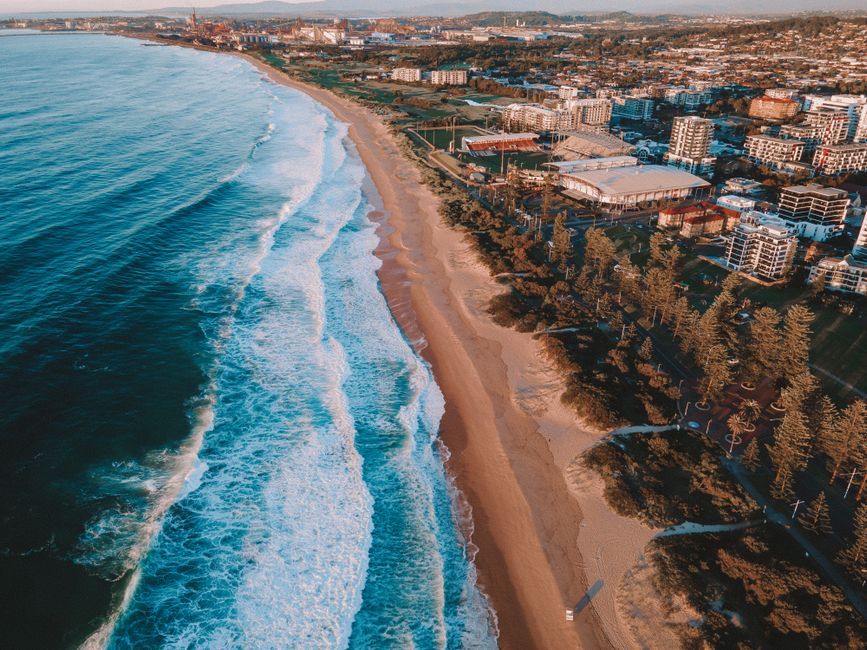
The transformation of Wollongong Station and its surrounding precinct is doing more than modernising the city's transport spine. It's fundamentally reshaping buyer appetite and property values across inner suburbs within walking distance of the interchange.
The $180 million station precinct upgrade, which accelerated following NSW planning approval in 2024, has triggered measurable interest in neighbourhoods that were previously overlooked by investors fixated on Fairy Meadow's coastal premium or Thirroul's beachside appeal. Properties in Wollongong CBD and adjacent suburbs like Coniston and Russell Vale are seeing renewed momentum as the first stages of works progress along Crown Street.
Real estate agents working the area report a shift in buyer demographics. Young professionals, downsizers, and investor portfolios—previously drawn to Sydney overflow markets—are now seriously evaluating Wollongong apartments and townhouses within 800 metres of the station. The proximity to improved rail services, better pedestrian access, and the $45 million public domain upgrade are proving decisive.
"We're seeing properties that stalled in 2024 moving again," one local agent noted, pointing to a 15–20 per cent uplift in enquiry for modest units close to Stuart Park since the project broke ground. Against the NSW median of roughly $860,000, Wollongong CBD stock remains relatively affordable, yet the infrastructure news has compressed the gap between asking and selling prices.
The precinct works include expanded retail, office and residential integration, plus enhanced connections to WIN Stadium precinct and the harbour foreshore via a series of new laneways and public spaces. The phased completion running through 2028 means early buyers are locking in pre-appreciation values.
Infrastructure-driven value uplift isn't accidental. Similar patterns emerged during the light rail construction phases in other NSW regions, where property markets adjacent to new transport nodes recovered faster than broader market trends. Wollongong's CBD redevelopment, backed by state and local government commitment, signals confidence that the city is shifting from a dormitory suburb image toward a genuine mixed-use destination.
Planning documents released by Wollongong City Council in recent months show deliberate coordination between the station upgrade and proposed zoning changes to Russell Vale and Coniston, permitting higher-density residential and mixed-use development. This regulatory backing provides additional certainty that the infrastructure investment will be supported by long-term urban change.
For buyers hedging against Sydney's volatility, the convergence of affordability, infrastructure certainty, and local government backing represents a rare window. As the station precinct moves from soft opening to full activation, those positions will likely prove prescient.
This article was compiled by AI and screened before publishing. See our editorial standards.
Spread the word
About this article
Published by The Daily Wollongong
Daily brief
Free, in your inbox before 7am. Weekdays.
Stay in the loop