News
Wollongong's Digital Image Problem: The Numbers Behind a Growing Data Headache
Duplicate and mismanaged images are costing Illawarra organisations real money and real time — and the scale of the problem is larger than most realise.
3 min read
News
Duplicate and mismanaged images are costing Illawarra organisations real money and real time — and the scale of the problem is larger than most realise.
3 min read
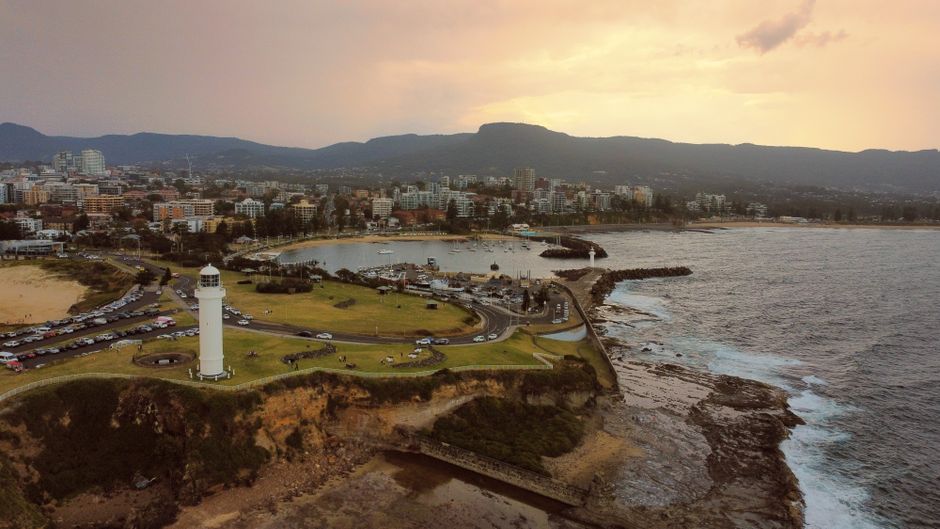
Wollongong's public sector and small business community is sitting on a quiet but measurable inefficiency: vast libraries of duplicate digital images that inflate storage costs, slow down websites and create compliance risks. Across the Illawarra, organisations ranging from University of Wollongong's digital learning platforms to Council of the City of Wollongong's planning portal are grappling with what IT managers broadly describe as uncontrolled image duplication — files saved multiple times under different names, embedded in documents, and scattered across cloud and on-premises servers.
The timing matters. With BlueScope Steel's green steel transition generating significant volumes of technical documentation and visual asset libraries at Port Kembla, and the Illawarra Shoalhaven Regional Development Fund pushing new grant recipients to build digital presences quickly, the volume of image files being created and stored across the region has accelerated sharply in 2025 and into 2026. Organisations rushing to publish without formal digital asset management protocols tend to accumulate duplicates fast.
Industry research published by analyst firm Gartner in 2024 estimated that unmanaged duplicate files — including images — account for between 30 and 40 per cent of total file storage in typical mid-sized organisations. For a regional council or a university department running a storage environment measured in terabytes, that overhead translates directly into cloud subscription costs paid monthly. Amazon Web Services S3 storage, a service used widely by Australian public institutions, was priced at approximately AUD $0.025 per gigabyte per month as of mid-2026 — a figure that compounds quickly when image libraries go unaudited for years.
The University of Wollongong's Sustainable Buildings Research Centre on Squires Way in North Wollongong, for instance, produces substantial volumes of photographic and technical image data as part of its built environment research. Research institutions of that scale commonly run digital repositories counted in hundreds of thousands of individual files. Without deduplication routines, industry practice suggests a meaningful share of those files are redundant copies.
Wollongong City Council's Development Applications portal on Crown Street — which publishes site photographs, architectural drawings and environmental images as part of its public planning process — represents another category of institutional image accumulation. NSW Government mandates that DA-related documents remain publicly accessible for defined retention periods, meaning deletion is not straightforward. The practical result is growing repositories that require active management rather than passive storage.
Small businesses along Crown Street Mall and in the Keira Street retail precinct face the same problem at a different scale. A retail operator running an e-commerce presence built on Shopify or WooCommerce will typically accumulate duplicate product images across seasons, sales campaigns and supplier updates. Platform-level tools exist to flag duplicates automatically, but adoption among Illawarra small business owners remains inconsistent, according to the general pattern seen in digital literacy programs run by bodies such as the Illawarra Business Chamber.
The practical fix is straightforward in principle: a scheduled deduplication audit using tools such as dupeGuru, which is free and open-source, or enterprise-grade digital asset management platforms starting at roughly AUD $300 per month for small teams. The audit identifies exact duplicates by hash comparison — meaning two identically sized and structured files register as the same regardless of filename — and near-duplicates by perceptual hashing, catching resized or recompressed versions of the same original image.
For organisations with more than 50,000 image files — a threshold University of Wollongong departments and Wollongong City Council almost certainly cross — running that audit once a year and establishing a naming convention enforced at point of upload is the minimum that IT governance frameworks recommend. The Australian Signals Directorate's Information Security Manual, updated in January 2026, does not mandate image deduplication specifically, but its broader data minimisation principles point in that direction.
The starting point for any Wollongong organisation is simple: run a file count. Most IT teams have never done one. The number is usually a surprise.
Spread the word
About this article
Published by The Daily Wollongong
Daily brief
Free, in your inbox before 7am. Weekdays.
Stay in the loop