Business
Reading Wollongong's Office Market: What Economic Signals Tell Us About Investment Flow
As capital becomes selective and interest rates stabilise, local commercial property experts decode the data reshaping our CBD.
2 min read
Business
As capital becomes selective and interest rates stabilise, local commercial property experts decode the data reshaping our CBD.
2 min read
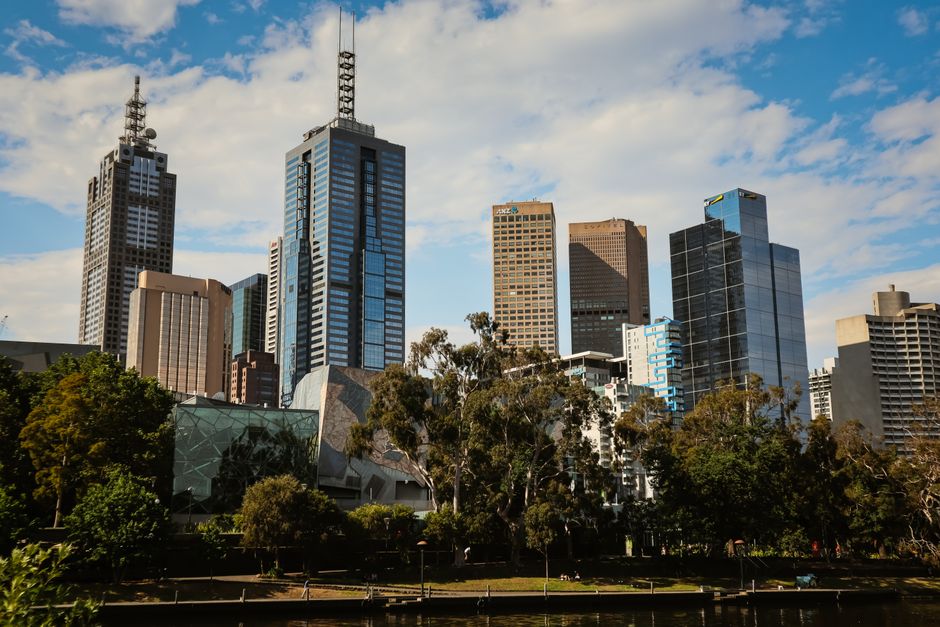
Wollongong's commercial property sector is sending mixed signals, and understanding what the numbers mean matters for investors, business owners and the broader economy. Recent activity across the CBD and surrounding precincts reveals how national economic indicators directly translate into local real estate decisions.
The office market on Crown Street and its tributary lanes has experienced modest compression over the past eighteen months. Average asking rents for Grade-A office space have plateaued at approximately $380–$420 per square metre annually, down from peaks of $450 seen in 2023. This isn't crisis territory—it reflects rational capital reallocation rather than panic.
What's driving this? Interest rates. The Reserve Bank's tightening cycle, now in pause mode, created uncertainty that rippled through investment decisions. When borrowing costs spike, the yield on commercial property becomes less attractive relative to bonds. Institutional investors—superannuation funds, REITs, foreign capital—pulled back on new acquisitions while evaluating existing holdings.
Vacancy rates tell a second story. The CBD's office vacancy currently sits around 12–13%, up from 8% in early 2023. Yet this masks important granularity. Modern, well-maintained buildings near the railway station and overlooking the harbour precinct maintain occupancy above 90%. Older stock, particularly on North Street and Keira Street, struggles to attract premium tenants seeking contemporary amenities and sustainability credentials.
The investment flow has consequently shifted. Rather than speculative purchasing, we're seeing targeted repositioning. Several significant transactions this quarter involved buyer groups with renovation intentions—converting older office towers into mixed-use developments combining residential, co-working and retail. This strategy hedges against prolonged office sector uncertainty while capturing housing demand.
Capital values reflect this caution. Stabilised office buildings traded at yields between 5.2% and 5.8% in recent months, compared to 4.1–4.5% in 2021. That spread—roughly 150 basis points—represents genuine compensation for risk. Sellers are accepting this reality; buyers are insisting on it.
The broader economic picture matters. Wollongong's employment base remains diversified—education, healthcare, manufacturing and tech sectors provide underlying tenant demand. Unlike pure CBD-dependent cities, this cushions downside risk.
What investors should watch: the next 12 months will test whether interest rate stability converts back into deployment. If the RBA signals a cutting cycle, capital typically re-enters the market swiftly. If inflation re-ignites, the correction deepens. For now, Wollongong's commercial property is pricing in reasonable caution, not despair.
This article was compiled by AI from the sources linked above and screened before publishing. See our editorial standards.
Spread the word
About this article
Published by The Daily Wollongong
Daily brief
Free, in your inbox before 7am. Weekdays.
Stay in the loop