property
Wollongong's Planning Overhaul Reshapes Who Buys, Where They Build, and What They Pay
A series of zoning amendments and state-backed housing directives are rewriting the rules across Wollongong's most sought-after suburbs, and buyers are already adjusting their calculations.
How we reported this
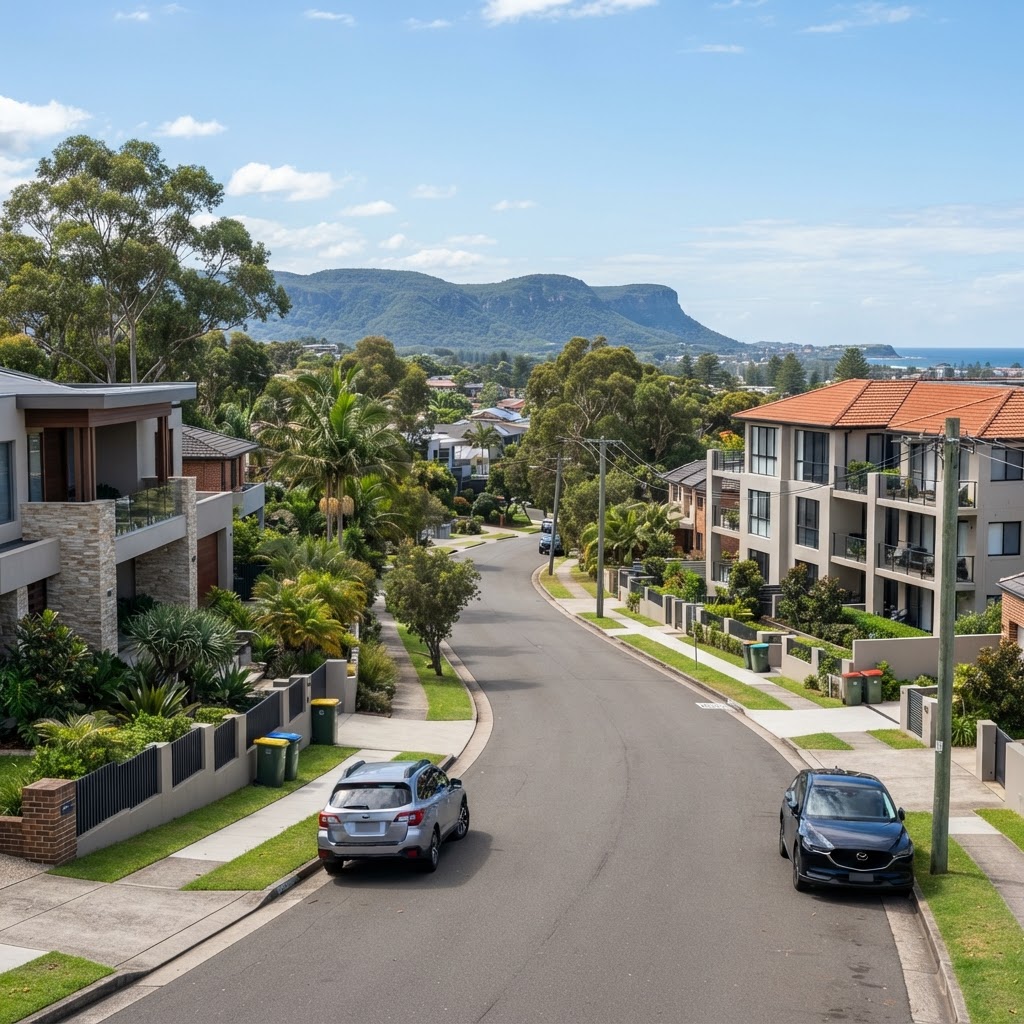
Wollongong City Council is mid-way through a phased review of its Local Environmental Plan that is quietly redrawing density boundaries from the Wollongong CBD fringe all the way north to Thirroul, with several key determinations expected before the end of the third quarter of 2026. The process, running alongside the NSW Government's Transport Oriented Development program, has put a handful of corridors, particularly around Fairy Meadow and Coniston, directly in the crosshairs of medium-density uplift.
The timing matters because the broader NSW housing market is under sustained pressure. The state median sits near $860,000 for houses, and Wollongong has absorbed a consistent stream of buyers priced out of Sydney's south-western and inner-western suburbs over the past three years. Every planning decision made at the Burelli Street civic centre now filters through to auction reserves on Corrimal Street and asking prices on Lawrence Hargrave Drive.
Where the Pressure Is Landing
Fairy Meadow is the clearest flashpoint right now. Buyers have been paying a coastal premium there for years, but the potential for rezoning to allow four-to-six storey residential development along Princes Highway nodes has introduced a new category of buyer: the small developer holding a site for medium-density approval. That speculative interest, layered on top of owner-occupier demand, pushed several Fairy Meadow properties to competitive auctions during the first half of 2026, with some sites drawing interest from both families and development syndicates in the same room.
Coniston tells a different story. Sitting closer to the Port Kembla industrial buffer and lacking Fairy Meadow's beach adjacency, it has historically traded at a discount. The LEP review's proposals to lift residential density along parts of the Illawarra railway corridor have begun attracting attention from investors who ran similar playbooks around Sydenham and Marrickville before those suburbs repriced sharply. Whether Coniston follows that trajectory depends heavily on what Council and the NSW Department of Planning finalise before Christmas.
North Wollongong, buffered by the lagoon and the entertainment precinct, is a more settled story. Development applications in that pocket have been steady, partly because the existing planning controls already permit higher density than most buyers realise. The area around WIN Entertainment Centre has seen a cluster of apartment projects move through the approvals pipeline in 2025 and early 2026, reinforcing the CBD-adjacent market as one of the region's most active.
What the Numbers Tell Buyers
CoreLogic data published earlier this year placed Wollongong's median house price at approximately $920,000, above the NSW state median and within range of suburbs like Penrith and Campbelltown that have their own infrastructure-led growth stories. For units, the Wollongong median tracked around $620,000, a figure that has drawn first-home buyers and downsizers in roughly equal measure.
The practical consequence of the planning changes is uneven. Buyers purchasing established homes in areas flagged for potential uplift are weighing an additional variable: a site that looks like a straightforward owner-occupier purchase today could have a materially different development envelope in 18 months. That possibility is not being priced in uniformly, which creates both risk and opportunity depending on how individual determinations fall.
Buyers' agents active in the Illawarra market have noted that clients with genuine medium-term hold horizons, five to seven years, are starting to ask granular questions about planning controls before they bid, rather than after. That shift in buyer behaviour alone signals how seriously the LEP review is being taken at street level.
For anyone actively looking between Thirroul in the north and Port Kembla in the south, the practical advice is straightforward: pull the planning certificates before you pull out the chequebook. Council's online mapping tool shows current zoning and flagged review areas, and a Section 10.7 certificate attached to any contract will outline what the land can and cannot do under current controls. Given the pace of change, that document has rarely been more worth reading.
This article is general information only and is not personal financial or investment advice. Consider your own circumstances and seek licensed professional advice before making financial decisions.