property
Build-to-rent is coming to Wollongong, but will it actually help renters?
A new model of purpose-built rental housing is edging into the Illawarra, and for tenants priced out of buying, the details matter more than the branding.
How we reported this
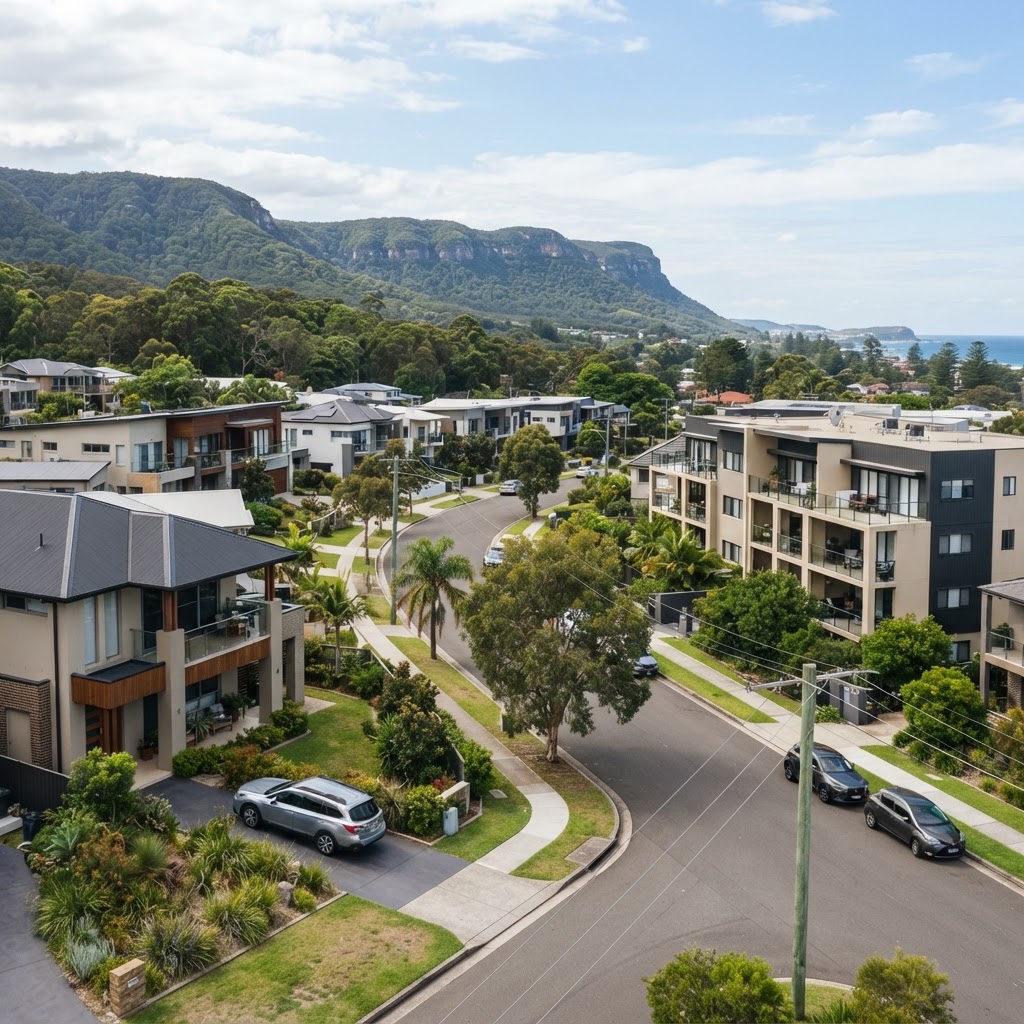
The NSW median house price is sitting at roughly $860,000, and in Wollongong's coastal pockets, Thirroul, Fairy Meadow, Austinmer, that figure climbs well past it. For the growing cohort of Illawarra residents who have quietly shelved homeownership plans, build-to-rent developments are being pitched as the structural fix a broken rental market needs. Whether the product matches the promise is a different question entirely.
Build-to-rent, known in the industry as BTR, involves large-scale residential buildings designed from the ground up to be rented permanently, with a single institutional owner rather than dozens of individual landlords. The model is standard in the United States and the United Kingdom, but in Australia it has been slow to scale. That is changing fast. The NSW Government's planning framework, updated in 2023, introduced specific zoning concessions for BTR projects, including density bonuses and land tax incentives for eligible developers. Wollongong sits in the crosshairs of that policy shift, positioned as both a Sydney overflow market and a regional city with its own swelling rental demand.
What Wollongong renters are actually facing
Crown Street and Keira Street in the Wollongong CBD remain the spine of the city's apartment rental market. A two-bedroom unit in that corridor was commanding weekly rents in the $550-$620 range through the first half of 2026, according to listings data tracked by local agents. That is up significantly from pre-pandemic benchmarks and leaves a household earning the NSW median income committing well above the standard 30 percent affordability threshold to rent alone. Buying is no easier. With the NSW median near $860,000 and a standard 20 percent deposit requirement, a first-home buyer would need to save roughly $172,000 before approaching a lender, a figure that, for many renters in their twenties and early thirties, belongs to a theoretical future rather than a near-term plan.
Gen Z buyers across the country still report wanting to own property, but survey data consistently shows the timeline has stretched. In the Illawarra, that delay is compounded by the coastal premium. Fairy Meadow properties, sitting between the escarpment and the beach barely five kilometres north of the CBD, have held values stubbornly above the broader Wollongong median for years.
What BTR actually offers, and what it doesn't
The genuine advantages of a properly run build-to-rent scheme are worth stating plainly. Longer leases, often three to five years as standard rather than the 12-month norm, give tenants a stability that the private rental market rarely delivers. Professional on-site management, maintenance response times written into tenancy agreements, and amenities like communal gyms, rooftop spaces, and co-working rooms are the product's calling card. For a renter in a converted 1970s walk-up on Bourke Street in Gwynneville dealing with a slow-moving private landlord, that proposition has real appeal.
The catch is price. BTR developments in Australian cities have consistently launched at rents at or above comparable private-market rates. The model's economics, institutional investors seeking stable long-term yields, do not automatically translate into below-market rents. NSW's land tax concession for BTR projects requires that at least 10 percent of dwellings be set aside as affordable housing, rented at a discount to market, but that still leaves the majority of units priced for working professionals, not the lowest-income renters the city most needs to house.
For Wollongong specifically, the University of Wollongong and the city's expanding health precinct around Wollongong Hospital on Crown Street generate steady demand from young professionals and students, exactly the demographic BTR developers target. Any project that does land in the CBD renewal zone will not struggle to fill units. The harder test is whether it adds to supply in a meaningful way or simply attracts tenants away from the existing private stock, leaving that market as tight as before.
Renters weighing their options in mid-2026 should look closely at any BTR lease terms before signing, specifically the rent increase provisions, which in some projects are indexed to CPI rather than capped by state tenancy law. Advocacy groups including the Tenants' Union of NSW publish plain-language guides on what BTR lease structures mean in practice. Reading the fine print now is cheaper than learning it at renewal time.
This article is general information only and is not personal financial or investment advice. Consider your own circumstances and seek licensed professional advice before making financial decisions.