news
Wollongong's battle against property listing photo fraud: how the city stacks up globally
Duplicate and misleading listing images are distorting Wollongong's already strained rental and sales market, and local agents say the problem is getting worse.
How we reported this
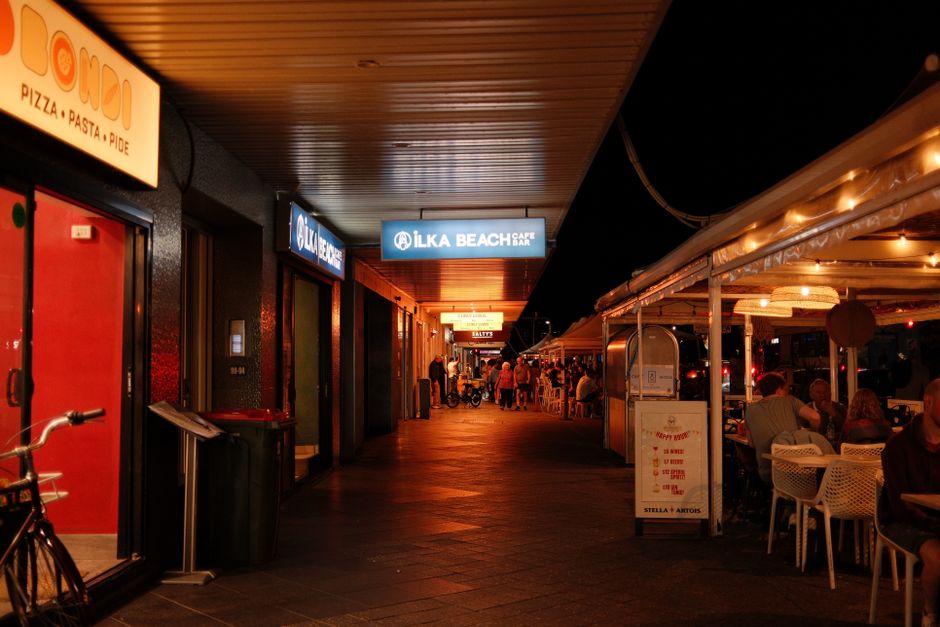
Wollongong's real estate sector is confronting a surge in duplicate image fraud across online property listings, a problem that has become acute enough for the Illawarra region's peak industry body to flag it as a formal compliance concern heading into the second half of 2026. Rental listings in suburbs including Fairy Meadow, Figtree and Gwynneville have in recent months carried photographs recycled from other properties, sometimes from interstate, sometimes from listings years out of date, leaving prospective tenants and buyers with a distorted picture of what they are actually paying for in one of New South Wales's most supply-constrained markets.
The timing matters. Sydney just recorded its hottest June since 1859, a run of weather that has pushed demand for cooler, better-ventilated housing in coastal and escarpment suburbs south of the city. That pressure, layered onto Wollongong's existing shortage of rental stock, has created exactly the conditions in which fraudulent or careless listing imagery does the most damage: renters moving fast, sometimes signing leases sight-unseen, find the property bears little resemblance to what was advertised on Domain or realestate.com.au.
The Real Estate Institute of NSW has published guidance on image verification requirements, and NSW Fair Trading administers complaints under the Property and Stock Agents Act 2002, but enforcement at the individual listing level remains largely reactive. Locally, the University of Wollongong's Smart Infrastructure Facility on Northfields Avenue has been exploring AI-based image-matching tools as part of broader smart-city research, technology that, in principle, could flag a recycled bathroom photograph before a listing goes live. The Illawarra Shoalhaven Joint Organisation, which coordinates regional planning across the four local government areas, has not yet adopted a formal duplicate-image audit as part of its housing supply work, though the issue has been raised in the context of the Illawarra Shoalhaven Regional Housing Strategy.
How other industrial port cities are handling it
Wollongong's experience tracks closely with that of comparable industrial-to-green-energy transition cities overseas. In Malmö, Sweden, a city of roughly 350,000 people that has undergone a similar shift away from heavy manufacturing toward knowledge and green industries, the national property portal Hemnet introduced automated reverse-image searches for all new listings in 2023. The Swedish Real Estate Agents Inspectorate reported a measurable reduction in duplicate-image complaints in the 12 months following that rollout, according to the inspectorate's 2024 annual report. Hamilton, Ontario, another steel-city analogue currently navigating its own green industrial transition, saw the Canadian Real Estate Association mandate geo-tagged photography for MLS listings from January 2025, making it technically difficult to pass off an image taken in Toronto as a Hamilton semi-detached.
Australia has no equivalent national mandate. The closest domestic comparison is inner Melbourne, where Consumer Affairs Victoria ran a targeted audit of rental listings on major portals across a six-week window in late 2025. The audit, covering postcodes in Fitzroy North, Brunswick and Footscray, found that roughly one in eleven rental listings contained at least one image that could not be verified as depicting the advertised property. No comparable audit has been conducted for the Illawarra, though the geographic and demographic profile of Wollongong's rental market, dominated by students, young professionals and workers connected to the Port Kembla Energy Terminal and BlueScope's transition projects, makes it similarly vulnerable.
What renters and buyers can do now
NSW Fair Trading accepts complaints about misleading property advertising through its online portal, and complainants can cite Section 30 of the Australian Consumer Law as the relevant provision. Wollongong renters who suspect a listing's images are inaccurate are advised to request a physical inspection before paying any holding deposit, a right that remains enforceable regardless of market pressure. The Tenants' Union of NSW, based in Sydney but providing advice across the state, publishes a checklist specifically addressing misleading advertising that is available on its website at no cost.
For the property industry locally, the more durable fix is likely technological. If the University of Wollongong's Smart Infrastructure Facility work on image verification matures into a commercial tool, there is an obvious market for it among the Illawarra's independent agencies, the kind of small operators who lack the compliance infrastructure of a national franchise but face the same liability exposure. That conversation, at least, appears to have started.